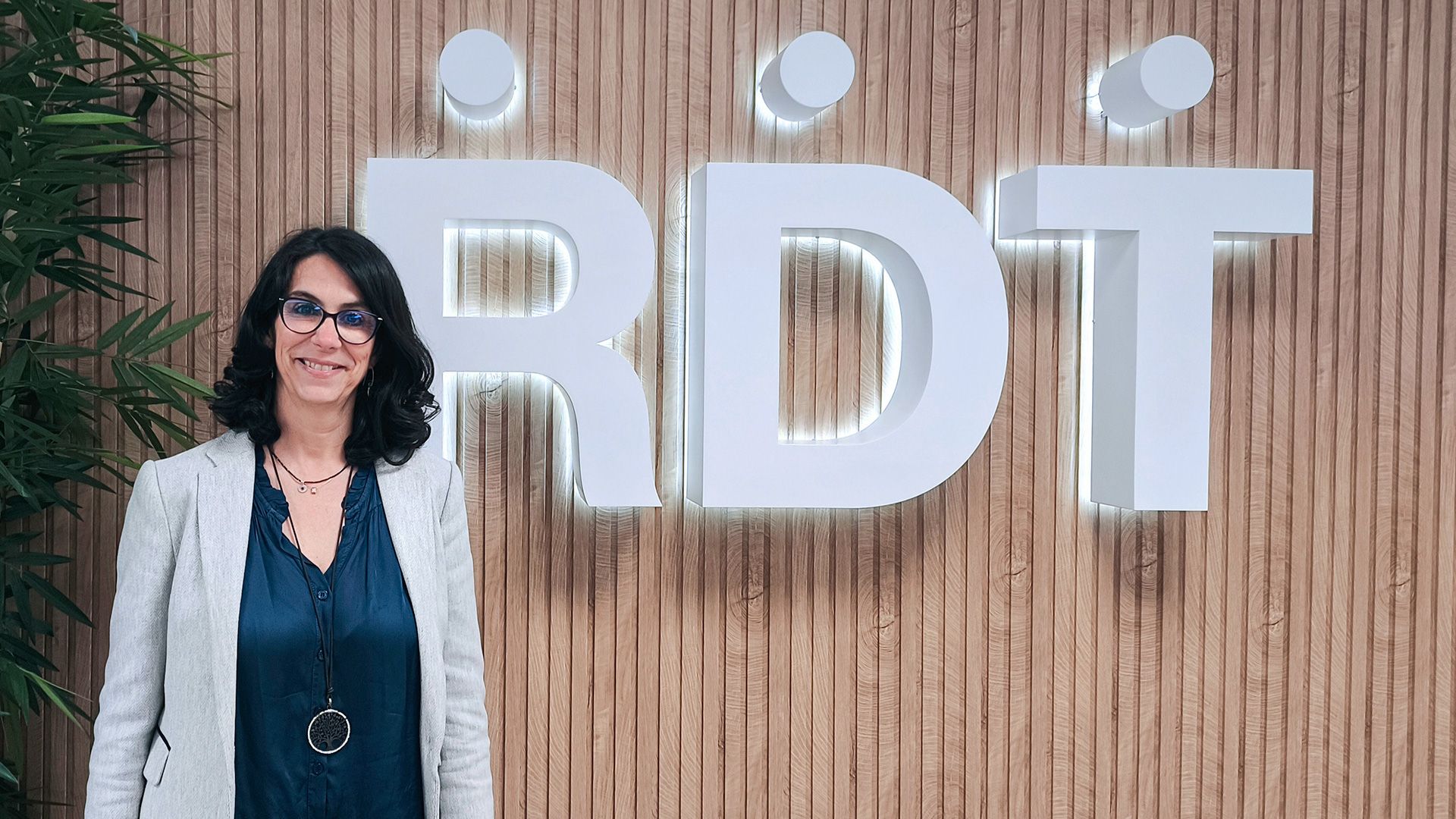
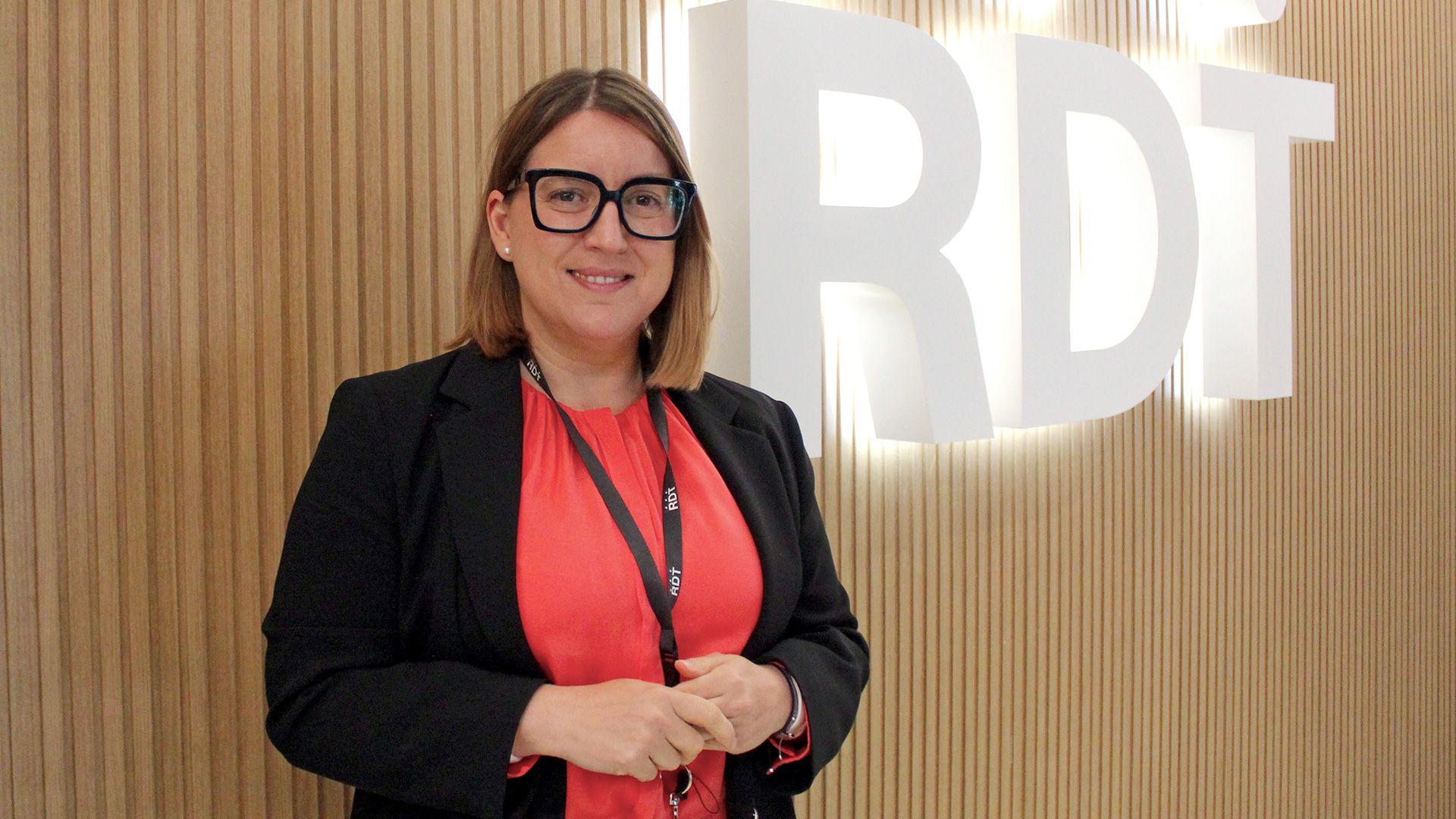
Pablo Revuelta, Managing Director of Intenance (RDT's Centre of Excellence in Industrial Asset Management), took part in a discussion organised by EL CORREO to explore the role of maintenance in the competitiveness of Basque industry, the shift towards predictive maintenance models and the challenges of attracting skilled professionals.
Industrial competitiveness increasingly depends on organisations' ability to ensure operational continuity, anticipate issues and optimise asset performance.
In this context, maintenance has evolved from an activity focused on repairing breakdowns into a strategic function directly linked to reliability, equipment availability and the efficiency of production processes.
This transformation was at the heart of the event “The Challenge for the Basque Country: Industry and the Future”, held in Bilbao.
The discussion also brought together Óscar Gómez, Reliability and Maintenance Director at Petronor, and Javier Cenzano, Managing Director of Tamoin. The debate highlighted some of the main challenges facing Basque industry: the adoption of new technologies, the need for skilled professionals and collaboration between industrial companies and specialised service providers.

From corrective maintenance to proactive intervention
Sensors, asset monitoring and data analysis are transforming industrial maintenance, making it possible to anticipate failures and prevent unplanned downtime.
However, having access to more information does not necessarily lead to better decisions. The ability to interpret data and translate it into concrete actions still depends largely on the technical knowledge and experience of professionals.
During the discussion, Pablo Revuelta emphasised precisely this combination of technology and specialist expertise.
As an example, he explained how analysing the power consumption of industrial motors can reveal deviations that may indicate mechanical problems, allowing intervention before equipment fails.
This approach reflects the shift towards predictive maintenance models, where the objective is no longer simply to resolve incidents but to reduce their occurrence and improve asset availability.
Equipment availability as an indicator of competitiveness
One of the main points of agreement during the discussion was the importance of equipment availability as an indicator of industrial maintenance performance.
In facilities where downtime can have significant consequences for production, ensuring that assets remain operational is essential to competitiveness.
Availability therefore becomes a measure of an organisation's ability to combine planning, safety, technical expertise and operational efficiency.
This approach encourages more integrated collaboration models between industrial companies and maintenance providers, based on shared objectives to improve long-term facility performance.
Talent: a challenge for industrial continuity
Beyond technology, attracting specialised talent and ensuring generational succession are among the main challenges facing industrial maintenance, particularly given the loss of technical knowledge and the increasing complexity of industrial facilities.
Pablo Revuelta highlighted the difficulties of finding professionals specialising in machinery maintenance, a field that requires experience, availability and an in-depth understanding of industrial environments.
The discussion underlined the importance of combining practical training, knowledge transfer and professional experience to address an industrial transformation in which people remain fundamental.
From maintenance provider to industrial partner
Another key topic was the importance of strengthening collaboration between industrial companies and their maintenance providers, integrating maintenance from the earliest stages of equipment design, procurement and commissioning.
During his contribution, Pablo Revuelta stressed the importance of aligning customer and supplier objectives from the initial stages of projects.
As an example, he explained that Intenance participates in machinery acceptance processes for customers such as ITP, involving the professionals who will subsequently be responsible for maintaining the equipment from the outset.
This integration makes it possible to anticipate operational needs, improve equipment knowledge and establish collaborative relationships based on shared objectives. It is a model in which maintenance is no longer seen as a standalone service but as an integral part of the customer's industrial strategy.
Knowledge, technology and people for a more reliable industry
The challenges discussed during the event reflect a transformation that is already taking place across the industrial sector.
At RDT, we combine technical expertise, technology and operational capabilities to help our customers improve the performance and reliability of their facilities.
This approach forms part of our commitment to developing specialised capabilities that address the challenges of an increasingly technological, connected and demanding industry.
Read the full article in EL CORREO: El mantenimiento, clave en la fiabilidad y la competitividad de la industria vasca